Skeleton Drinking Chocolate at Christmas
A Playful, Festive Spark for Boutique Apparel
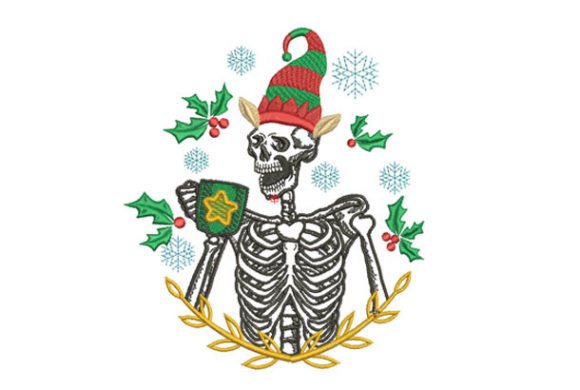
As an embroidery designer who’s developed seasonal collections for indie apparel brands and Etsy sellers for over a decade, my first impression of Skeleton Drinking Chocolate at Christmas was immediate: it’s clever, cohesive, and commercially smart. It doesn’t lean into spooky clichés or saccharine sweetness — instead, it balances dry humor with warmth, giving it strong visual personality across age groups and brand voices. The skeleton sits relaxed, mug in hand, steam curling upward like a gentle sigh — not a grim reaper, but a cozy, slightly mischievous guest at your holiday table. Stitching mood? Light-hearted and confident. Detail level is thoughtful without being fussy: the mug handle, subtle cocoa swirls, and soft shading on the bones all read clearly at 3–4 inches wide. It feels premium *and* approachable — ideal for a boutique brand that values craftsmanship but refuses to take itself too seriously.
How It Performs Across Real Apparel Projects
Sweatshirt embroidery and hoodie design are where Skeleton Drinking Chocolate at Christmas truly shines. On neutral heather grey or oatmeal sweatshirts, it pops with quiet charm — no need for high-contrast thread unless you want extra vibrancy. Pastel hoodies (think mint, blush, or lavender) let the design feel unexpectedly fresh and gender-neutral. On dark garments — charcoal, navy, or black fleece — I recommend rich brown or cream thread for legibility and warmth; avoid overly thin outlines that could disappear in the pile. For oversized garments, the design scales well up to ~5 inches without losing clarity, especially if stitch density remains balanced (more on that below).
It works beautifully as a chest placement on crewnecks and hoodies — centered or slightly off-center for asymmetry. As a sleeve accent, it adds wit without overwhelming. A single small version (~2.5") on the left sleeve cuff reads as intentional, not cluttered. For back designs, consider pairing it with minimalist text (“Hot Cocoa & Zero Regrets”) or using it solo as a focal point — just ensure your hoop size accommodates the full layout before stitching.
On t-shirts, it holds up best on midweight cotton or tri-blends with light stabilizer backing — avoid ultra-thin knits unless you test first. Denim jackets welcome its contrast: stitch it on the back yoke or chest pocket flap for instant character. Tote bags? Perfect — the design’s rounded shapes and contained footprint prevent distortion on canvas or woven cotton. And for lifestyle product photos or printable mockups, its expressive pose and clear silhouette make it highly photogenic against rustic wood, marble, or soft knit backdrops.
Smart Placement & Fabric Considerations
Because Skeleton Drinking Chocolate at Christmas includes fine details — like the steam line and mug rim — avoid placing it directly over high-stretch areas (e.g., side seams, underarm gussets) or curved surfaces (like deep V-necks) without testing. Ribbed fabric (such as sweater-knit cuffs or collars) requires medium-weight cutaway stabilizer to prevent puckering around dense stitch zones. Fleece and brushed fabrics benefit from topping (a water-soluble film) to keep surface fibers from tangling in the design.
Small chest placements (under 3") work well, but inspect the lettering in “Chocolate” — if scaled too tiny, the script may lose legibility. Always check Creative Fabrica product details for minimum recommended size. Tiny lettering also demands precise digitizing; this design handles reduction cleanly, but verify before mass production.
Strengthening Your Brand & Customer Connection
For small shop products and Etsy sellers, Skeleton Drinking Chocolate at Christmas supports visual consistency without sacrificing uniqueness. It fits seamlessly into a curated holiday collection alongside snowflake motifs or minimalist trees — but stands out through narrative. That storytelling builds customer engagement: shoppers pause, smile, and remember your brand because the design invites interaction, not just decoration.
Used thoughtfully, it elevates perceived value — turning a basic sweatshirt into a handmade product with personality. Buyers associate that care with trust, especially when paired with clean stitching, quality thread colors, and intentional placement. For commercial embroidery clients or wholesale partners, it signals design fluency: you understand tone, audience, and seasonality. It’s not just festive — it’s *seasonally intelligent*.
Practical Designer Notes Before You Stitch
- Test on scrap fabric — especially if using stretchy, ribbed, or textured materials. Observe how the steam line and bone contours hold up after washing.
- Confirm stabilizer choice: lightweight cutaway for stable knits, medium cutaway + topping for fleece or denim.
- Review thread color contrast — warm browns, creamy ivories, or even muted rusts enhance the cocoa theme more than stark black or white.
- Verify hoop size and design dimensions before loading — some versions may include alternate layouts (e.g., mug-only or skeleton-only variants). Check Creative Fabrica product details carefully.
- Inspect stitch density — avoid overloading small areas; if the steam or mug handle looks crowded, reduce density slightly in your editing software.
- Test on similar garment fabric, not just quilting cotton — tension and feed behavior differ drastically.
- Compare placement options using printed templates or digital overlays before hooping the final piece.
- Check Creative Fabrica licensing terms before selling finished apparel — confirm commercial use permissions for your intended scale.
Ultimately, Skeleton Drinking Chocolate at Christmas isn’t just another Creative Fabrica embroidery download. It’s a ready-to-deploy moment of levity — one that aligns with how modern buyers want to celebrate the season: warmly, wittily, and authentically. Whether you’re building a custom apparel line, stocking a holiday pop-up, or refreshing your digital embroidery file library, this machine embroidery design earns its place through versatility, voice, and quiet sophistication. Just remember: great embroidery starts long before the needle drops — with intention, testing, and respect for both the design and the garment it will call home.