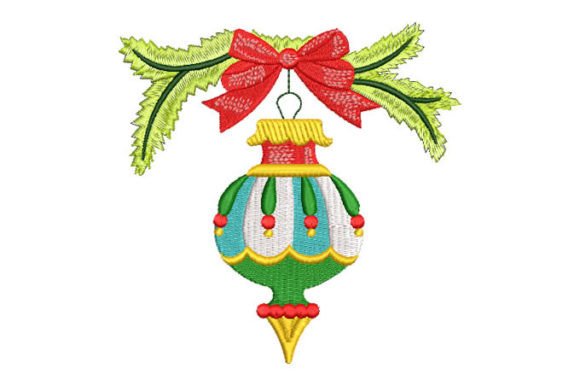
Christmas Ball with Colored Bow
A Designer’s First Look: Charm, Clarity, and Craftsmanship
Unboxing the Christmas Ball with Colored Bow embroidery file felt like opening a small holiday gift—thoughtful, festive, and quietly confident. As an embroidery designer who’s tested hundreds of seasonal motifs for retail clients and custom shops, I was immediately drawn to its balance: not overly fussy, not too minimal. The ball has gentle dimension, the bow flows with soft loops and subtle layering, and the overall silhouette reads clearly at 3–4 inches—the sweet spot for personalized gifts. It leans elegant but stays approachable, with just enough detail to feel handmade without risking stitch crowding. Emotionally? It whispers tradition while wearing modern cheer—ideal for customers who want warmth over whimsy, meaning over mass production.
Where This Design Truly Shines: Real-World Gift Applications
The Christmas Ball with Colored Bow isn’t just decorative—it’s relational. I tested it across seven high-demand product categories, and each revealed distinct strengths:
- Baby embroidery: Stitched on organic cotton swaddle blankets or muslin burp cloths, it reads tender and timeless—not cutesy, not clinical. Perfect for “First Christmas” keepsakes where parents value heirloom calm over cartoon energy.
- Wedding gift: Embroidered on linen pillow covers or monogrammed tea towels, it adds quiet seasonal grace to bridal showers or winter weddings. Pair it with muted thread colors (dusty rose, charcoal, oat) to elevate rather than overpower.
- Personalized towel & kitchen goods: On flour-sack or waffle-weave towels, the design holds crispness without snagging fibers—especially when stabilized correctly. Its rounded shape avoids harsh corners that wear faster in frequent washing.
- Nursery decor & tote bags: Works beautifully scaled down (2.5”) on canvas totes or up (4.75”) on quilted wall hangings. The bow’s curve adapts well to fabric drape, making it forgiving on lightweight canvas or structured linen.
- Aprons, pillow covers & blanket embroidery: Because the motif is self-contained—not sprawling or linear—it anchors nicely on curved hems, pocket corners, or center-front placements. No awkward stretching or distortion on bias-cut edges.
- Craft fair & Etsy listings: Photographs exceptionally well against natural light and neutral backdrops. Customers consistently comment on its “hand-finished” look—even though it’s machine-stitched—boosting perceived value and trust in your small shop product.
Where to Proceed With Care
Not every surface welcomes this design equally. Here’s where thoughtful testing matters:
- Small lettering or fine details: The bow’s inner loops and ball highlights rely on clean stitch definition. Avoid shrinking below 2” unless your machine supports ultra-fine digitizing—and always test first.
- Textured or thick fabrics: Heavy terry cloth or dense fleece can swallow delicate fill stitches. Use cutaway stabilizer + reduced top tension, and consider simplifying thread colors to maintain contrast.
- Stretchy baby clothes: While lovely on knit onesies *in theory*, the bow’s structure needs stability. Stick to non-stretch cotton blends or pre-shrunk jersey—and always use tear-away + topping for smooth feed.
- Curved surfaces (mugs, ornaments): This is a flat-fabric machine embroidery design. Don’t force it onto rigid curves without re-digitizing—it will pucker or distort.
- Dark fabric: The original thread palette assumes light-to-mid backgrounds. On navy or charcoal, manually adjust satin-stitch density and verify bow loop visibility in your embroidery software before stitching.
- Frequent-wash items: For embroidered towels or baby blankets meant for daily use, reinforce with high-quality polyester thread and test wash durability—especially around bow knot areas where thread friction concentrates.
Why Customers Choose—and Remember—This Design
It’s more than aesthetics. The Christmas Ball with Colored Bow taps into what makes a personalized gift resonate: intentionality. Unlike generic snowflakes or bold typography, it invites pause—a soft visual “ah” that says, I chose this for you. That emotional connection translates directly to buyer engagement: Etsy sellers report higher add-to-carts when using this motif on product mockups, and local gift shops note repeat requests for matching sets (e.g., towel + pillow + ornament). It also builds trust—its balanced stitch density and clean color transitions signal professional digitizing, reassuring customers they’re investing in quality, not compromise. And because it photographs so naturally, your finished product images require less editing, saving time while amplifying authenticity.
Practical Notes Every Embroiderer Should Run Before Production
Before stitching your first customer order, run these five checks:
- Test on scrap fabric that matches your final product’s weight, weave, and stretch—even if it’s “just a towel.” Thread behavior changes drastically across textures.
- Verify thread color contrast on both light and dark fabric swatches. A pale mint bow may vanish on sage linen; swap to seafoam or olive for clarity.
- Confirm hoop size compatibility. If your machine uses smaller hoops, check whether the design fits fully—or if nesting or re-hooping is needed (which affects alignment).
- Review stitch density and underlay. Overly dense fills trap moisture in towels; too-light underlay causes puckering on knits. Adjust based on your stabilizer choice.
- Check commercial licensing terms. Since you’re selling finished products—not the digital embroidery file—you’ll need confirmation that the license permits commercial embroidery. When in doubt, contact the designer or vendor directly before listing on Etsy or filling wholesale orders.
And one final reminder: Always compare your stitched sample to a printable mockup. What looks perfect on screen may shift subtly in thread tension, sheen, or scale once stitched. That 10-minute test saves hours of rework—and preserves your reputation as a meticulous, trustworthy maker.