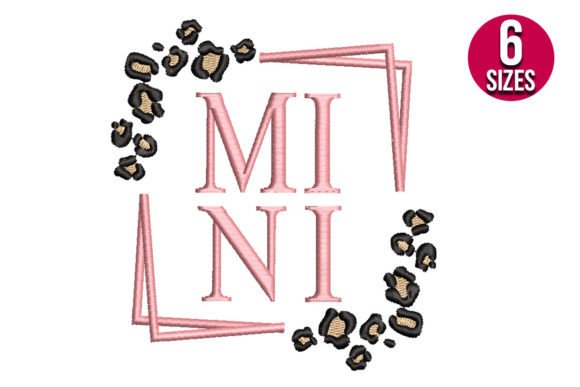
Mini with Leopard Print
A Craft Fair Designer’s First Look: Bold, Cute, and Instantly Recognizable
As someone who’s stitched over 300 craft fair booths—and watched thousands of shoppers pause, point, and reach for a product—I can tell you Mini with Leopard Print lands exactly where it needs to: in the “I want that *now*” zone. It’s not farmhouse. Not vintage. Not minimalist or rustic. It’s stylish, modern, and cute—a rare trifecta that reads clearly at three feet, pops on a crowded table, and feels intentional, not trendy. That leopard print isn’t loud—it’s confident. And “Mini” signals approachability: small enough for delicate items, scalable enough to anchor a larger piece. For Mother’s Day? It’s a quiet standout—playful but polished, personal but never childish.
Where Mini with Leopard Print Shines (and Where It Needs Care)
This machine embroidery design thrives where personality meets practicality. On a tote bag design, placed just above the side seam or centered low on the front, it adds instant charm without overwhelming the canvas. As apron embroidery, it works beautifully on the pocket—a focal point that invites touch and conversation. For tea towel embroidery, position it near the top hem or corner; the contrast between soft linen and graphic print creates tactile and visual interest that photographs exceptionally well for Etsy listings.
Embroidered patch potential is high—Mini with Leopard Print translates cleanly into a sew-on or iron-on format, especially when backed with lightweight fusible stabilizer. On caps, stick to the front panel only; avoid curves near the bill or crown unless you’ve tested stitch hold on stretchy twill. For pillow covers and small pouches, it scales down gracefully—no lost detail, no jagged edges—making it ideal for batch production of coordinated gift sets.
What Makes This Design a Craft Fair Workhorse?
First, it’s instantly legible. No squinting. No decoding. Shoppers see “leopard + mini” and immediately grasp tone, audience, and use case. Second, it’s versatile in scale: works as a 1.5-inch accent on a keychain or a 4-inch statement on a market bag. Third, it photographs with intention—clean lines, strong contrast, and balanced negative space mean your printable mockup or Instagram flat lay looks pro, even shot on phone. And fourth, it’s repeatable: consistent stitch density across versions means fewer thread breaks, smoother hooping, and faster turnaround during peak craft fair prep.
Careful-Use Notes Every Embroidery Business Owner Should Know
- Dense stitch areas: Leopard spots may cluster tightly—check for heat buildup on dark fabrics or textured towels. Use a medium-weight cutaway stabilizer to prevent puckering.
- Tiny details: While “Mini” implies simplicity, verify spot edges aren’t overly fine—if they’re under 0.8mm, test on your densest fabric first.
- Curved surfaces: Caps and pouch gussets demand precise hooping. Always do a baste-stitch outline before full run.
- Dark fabric: Leopard print relies on tonal contrast. On navy or charcoal, confirm thread colors provide enough pop—avoid matching spot tones too closely.
- Small sizes: Below 1.2 inches, test clarity on your actual production fabric—not just screen previews. Some digital embroidery files compress detail unpredictably.
How Mini with Leopard Print Elevates Your Handmade Product Line
This isn’t just another embroidery file—it’s a booth magnet. Placed on three coordinated items (e.g., tea towel, pouch, and apron), it builds visual rhythm and brand cohesion without needing logos or fonts. Customers subconsciously register consistency, which boosts perceived quality and price confidence. As a small shop product, it helps you stand out from generic florals and script quotes—especially in Mother’s Day season, where sentiment often overshadows style. And because it’s inherently giftable, it converts browsers into buyers faster: “This is *so* her” happens in seconds.
Practical Embroidery Designer Notes Before You Hoop
- Test on scrap fabric—same weight, weave, and dye lot as your final product.
- Check thread contrast on both light and dark bases—don’t assume the default palette works universally.
- Review spacing between spots and outer edge—tight margins cause trimming errors on patches or appliqués.
- Confirm hoop size compatibility with your frame setup—especially if using multi-needle or compact machines.
- Inspect stitch density in the file preview—look for overlapping jumps or unnecessary underlay in tight zones.
- Use the right stabilizer: cutaway for knits and towels, tear-away for stable wovens, fusible for patches.
- Create at least one real mockup—not just a digital render. Light, texture, and drape change everything.
- Compare fabric colors side-by-side—dye lots vary, and leopard tones shift dramatically on oat vs. ivory linen.
- Confirm commercial licensing before selling finished products—this is non-negotiable for Etsy sellers and wholesale partners.
Final Thought: A Design That Sells Itself—If You Let It
Mini with Leopard Print doesn’t need backstory, explanation, or seasonal justification. It arrives fully formed: stylish, modern, and cute—exactly what handmade customers seek when they slow down at your booth. It supports your craft fair product strategy by being equally effective as a standalone accent or part of a curated collection. As an embroidery file, it’s flexible, forgiving, and finish-ready—provided you honor its nuances in production. For the Etsy seller, the digital embroidery file buyer, and the boutique maker building signature design assets, this is more than decoration. It’s a quiet signal: You understand taste. You value craft. And you know what sells.