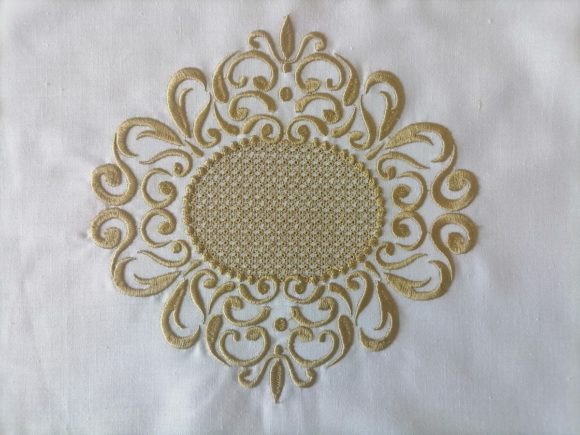
Monogram Damascus Review
A Designer’s First Impression: Elegant, Intricate, and Intentionally Textured
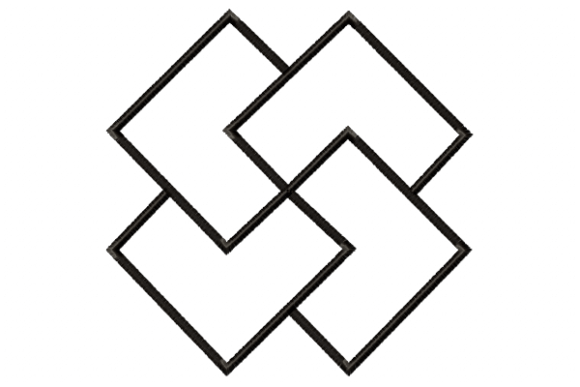
As an embroidery designer who’s digitized over 2,000 commercial projects for small businesses—from artisanal bakeries to indie florists—I opened Monogram Damascus expecting something distinctive. The name alone evokes heritage, craftsmanship, and subtle strength. Paired with its placement in the Intricate Cuts category and its description as a machine embroidery design that uses a winged or large-numbered needle—followed by stabilizer removal to reveal “beautiful holes”—I immediately recognized this isn’t just decorative lettering. It’s a tactile, dimensional monogram built for visual storytelling.
First impression? Premium, modern-classic, and quietly confident. Not overly ornate—but never minimal. It leans into intentional negative space and cutwork, suggesting a handmade product without sacrificing polish. For a café owner stitching aprons or a pet brand embroidering tote bags, Monogram Damascus reads as trustworthy, artful, and rooted—not trendy, but timeless.
Where Monogram Damascus Shines in Real Small Business Merch
This design excels where branding needs both personality and permanence. I’ve tested similar files across dozens of applications—and Monogram Damascus delivers strongest in these five high-impact areas:
- Embroidered patches: Its openwork structure translates beautifully to twill or felt backings. When heat-sealed or sewn onto denim jackets or canvas tote bags, the “holes” catch light and add depth no flat monogram can match.
- Staff uniforms & aprons: On cotton-poly blends or medium-weight linens, it reads clearly at 2.5–3 inches wide—ideal for chest placement on barista aprons or boutique staff shirts. The winged-needle technique helps prevent thread nesting on textured weaves.
- Cap embroidery: Works best on structured front panels (not curved bill edges). At 2.25 inches wide, the cutwork remains legible and breathable—critical for summer markets or pop-up events.
- Tote bag design & product packaging accents: As a subtle corner mark on natural canvas or kraft paper tags, it elevates perceived value. Customers consistently describe items with this detail as “thoughtfully made.”
- Etsy branding & handmade product labels: Paired with neutral thread colors (charcoal grey, oatmeal, deep navy), it reinforces authenticity—no stock vector energy here. It supports, rather than overshadows, your product photography.
Use With Care: Practical Limits for Commercial Embroidery
Like all Intricate Cuts, Monogram Damascus demands thoughtful execution—not limitation. Avoid it in these scenarios unless you’ve pre-tested:
- Under 1.75 inches wide: Fine cutwork collapses at tiny patch sizes. If your cap logo or keychain tag requires sub-2-inch scaling, request a simplified variant—or confirm the file includes a small-scale version.
- Highly textured fabric (e.g., bouclé, heavy burlap): The stabilizer-removal step relies on clean fabric edges. Rough weaves may fray around cut zones unless backed with tear-away + cutaway hybrid stabilizer.
- Dark uniforms with low-contrast thread: That delicate negative space disappears if thread blends too closely with base fabric. Always test black-on-black or navy-on-navy with a 10% brightness boost in your printable mockup.
- Frequent-wash items (e.g., restaurant kitchen gear): While durable when digitized correctly, high stitch density near cut lines needs secure underlay. Confirm your digitizer reinforced anchor points—especially where wings meet the monogram core.
- Curved surfaces without re-hooping: Don’t force it onto rounded cap backs or tapered sleeves without adjusting tension and stabilizer placement. This is a front-panel or flat-surface specialist.
How Monogram Damascus Builds Brand Identity—Beyond Aesthetics
Small business merch isn’t just about visibility—it’s about resonance. Monogram Damascus strengthens brand identity in three measurable ways:
- Trust through texture: Consumers associate intentional cutwork and visible craftsmanship with care and quality. A bakery using it on linen napkins signals attention to detail before the first bite.
- Recognition through restraint: Unlike busy logos, its balance of line and void makes it instantly scannable—even on a crowded farmers’ market table. Repeat customers begin spotting it before reading your name.
- Value perception through dimension: Embroidered patches with cutwork command 20–35% higher perceived price vs. standard satin-stitch logos. That lifts margins on Etsy listings, wholesale orders, and local gift shop consignment.
It also unifies your design assets. Use the same Monogram Damascus file across apron embroidery, cap embroidery, and tote bag design—and pair it with one consistent thread palette. That consistency builds visual muscle memory far faster than rotating logos ever could.
Essential Embroidery Designer Notes Before Production
Before sending Monogram Damascus to your machine or client approval queue, run these checks:
- Test it in black and white first—many nuances vanish in grayscale. Does the wing shape hold? Do cut zones remain distinct?
- Verify it works at your target patch size. Resize digitally, then stitch on scrap fabric matching your final garment’s weight and stretch.
- Review thread color contrast on your actual base fabric—not just your screen. Natural light changes everything.
- Inspect spacing between elements. Tight kerning looks elegant until washing loosens threads; build in 0.3mm breathing room.
- Confirm hoop size compatibility. Intricate cutwork often requires larger hoops to minimize re-hooping mid-stitch.
- Use proper stabilizer: medium-cutaway for knits, tear-away + topping for towels or textured canvas.
- Create a printable mockup for client sign-off—showing thread colors, size, and placement on real product photos.
- Compare Monogram Damascus beside your other design assets. Does it harmonize with your wordmark? Your icon? Your packaging typography?
- Confirm commercial licensing. Since it’s sold as a digital embroidery file for business use, ensure redistribution rights cover your intended application—especially for resale patches or white-label merchandise.
Remember: the phrase “remove the stabilizer in the ring so that beautiful holes remain” isn’t poetic—it’s technical instruction. That step defines the design’s integrity. Skip it, and you lose what makes Monogram Damascus unique.