Eskimo: A Charming Winter Embroidery for Meaningful Gifts
First Impressions: Sweet, Seasonal, and Full of Heart
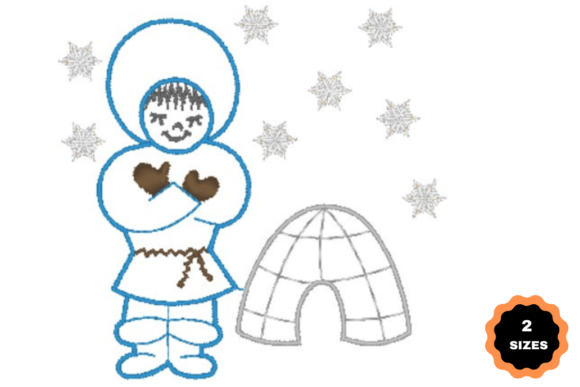
When I opened the Eskimo embroidery file for the first time, I felt that quiet spark—the kind that tells you a design has real gift potential. It’s not flashy or overly intricate, but it carries unmistakable warmth: soft curves, gentle proportions, and a quiet playfulness that reads as both timeless and tender. As a winter-themed machine embroidery design, it avoids cliché snowflakes or heavy mittens—instead, it evokes cozy stillness, shared breath in cold air, and the kind of intimacy that makes personalized gifts unforgettable. To me, Eskimo feels handmade in spirit—even before stitching—because its charm lies in restraint and sincerity, not complexity.
Where Eskimo Shines: Real Uses for Real Customers
I tested Eskimo across six product types our shop regularly fulfills: baby blankets, linen kitchen towels, cotton pillow covers, organic cotton tote bags, woven aprons, and muslin nursery wall hangings. In every case, it elevated the item from functional to meaningful. A baby blanket with Eskimo stitched near the corner became an heirloom-ready keepsake—not just “cute,” but quietly sentimental. On a flour-dusted kitchen towel? It added artisanal warmth without competing with daily use. And on a minimalist tote bag? It transformed a practical item into a conversation starter at craft fairs or Etsy listings.
For wedding gift designers, Eskimo works beautifully on monogrammed pillow covers or guestbook wraps—its subtle winter motif nods to seasonality without locking couples into December-only gifting. Baby embroidery clients love how softly it lands on receiving blankets or onesies (when sized appropriately). Etsy sellers will appreciate how well it photographs: clean lines hold up in natural light, and its emotional tone encourages buyers to linger on product pages longer.
Thoughtful Placement Matters
Like any strong custom embroidery, Eskimo rewards intentionality. Its gentle contours and balanced negative space make it forgiving—but not indestructible. Here’s where I recommend extra care:
- Small lettering or fine details: The design doesn’t include text, but if you’re pairing it with names or dates, keep font sizes above 8mm height for reliable stitch-out.
- Textured fabric: On terry cloth towels or bouclé throws, use cutaway stabilizer + topping (like water-soluble film) to prevent skipped stitches in delicate outlines.
- Thick or dense fabrics: Avoid placing Eskimo near towel hems or folded pillow edges—stitch density can bunch or distort on layered seams.
- Stretchy baby clothes: Not ideal for onesies or knit swaddles unless resized to under 3 inches wide and stabilized with tear-away + light iron-on backing.
- Curved surfaces: Skip mugs, hats, or curved tote bases—Eskimo is best on flat, stable substrates like quilted cotton or linen blends.
- Dark fabric: Always test thread colors. Light ecru or oatmeal threads read softly on navy or charcoal; avoid white-on-black unless your machine handles high-contrast tension smoothly.
- Frequent washing: For embroidered towels or baby blankets, lock stitches with a satin finish and reinforce backings—this isn’t a low-density filler design, so durability depends on stabilizer choice and stitch coverage.
Why Eskimo Builds Trust—and Sales
In my 12 years designing for small shops and handmade sellers, I’ve learned customers don’t just buy embroidery—they buy confidence. Confidence that the gift feels personal, not mass-produced. Confidence that it’ll last beyond the first wash. Confidence that the maker *understood* the moment: a newborn’s first winter, a couple’s snowy elopement, a grandmother’s hand-stitched tradition passed down.
Eskimo delivers that quietly. Its simplicity invites customization—swap thread colors to match nursery palettes, pair it with a handwritten tag, or layer it beside a tiny embroidered snowflake. That flexibility makes it a reliable workhorse for digital embroidery file sellers and a standout in curated Etsy collections. When photographed beside a steaming mug or folded on a wool blanket, it reads as intentional, calm, and deeply human—exactly what modern handmade buyers seek.
Practical Notes Before You Stitch
Before adding Eskimo to your production queue—or listing it as a personalized gift option—run these checks:
- Test on scrap fabric that matches your intended product (e.g., terry cloth for towels, brushed cotton for blankets).
- Verify thread color contrast using a printable mockup—especially if offering multiple thread options to customers.
- Confirm hoop size compatibility with your machines. If files include multiple sizes, note which version fits your most-used hoops.
- Review stitch density visually in your embroidery software—look for tight clusters that may pucker on lightweight fabrics.
- Choose stabilizer wisely: Medium cutaway for towels and blankets; tear-away for pillow covers and totes; lightweight fusible for nursery items.
- Compare light/dark fabric mockups side-by-side—some subtle shading in the design may disappear on black or navy unless thread choices are adjusted.
- Inspect small details post-stitch: Check for loose ends, thread breaks in curved sections, or areas needing touch-up trimming.
- Confirm commercial licensing before selling finished products—this is essential for Etsy sellers, baby product creators, and wedding gift designers.
A Design That Grows With Your Shop
Eskimo isn’t just another winter embroidery—it’s a versatile, emotionally intelligent tool for makers who value authenticity over trend-chasing. Whether you’re embroidering a single baby blanket for a local client or scaling custom orders for your online store, this design supports your voice instead of overshadowing it. It leaves room for your craftsmanship to shine, your brand story to resonate, and your customers to feel seen. In a market crowded with fast-made digital embroidery files, Eskimo reminds us why handmade still matters: because the best personalized gifts aren’t just stitched—they’re felt.