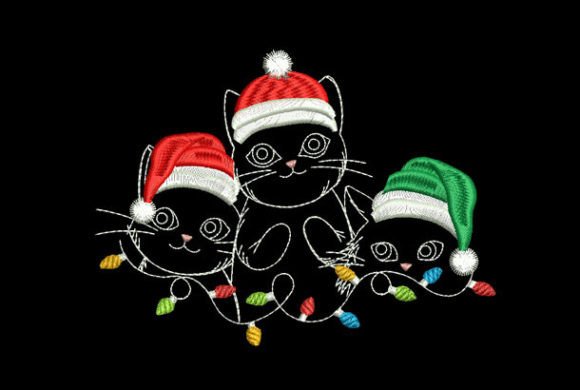
Crazy Christmas Cats: A Designer’s Real-World Embroidery Review
First Impression: Playful, Not Precious
When I opened Crazy Christmas Cats for the first time, I didn’t see “holiday perfection”—I saw personality. Three cats in varying poses (one with antlers, one tangled in tinsel, one wearing a tiny Santa hat) arranged in a loose, asymmetrical cluster. It’s not symmetrical or overly polished—and that’s exactly why it works. The design leans into whimsy without tipping into clutter. As a designer who regularly tests embroidery files for client-ready use, I immediately thought: *This belongs on a canvas tote bag for a local boutique’s holiday pop-up.* Not a formal sweater, not a monogrammed heirloom blanket—but something cheerful, wearable, and unmistakably handmade.
Where It Shines: Casual Holiday Craft Business Projects
Crazy Christmas Cats thrives where charm matters more than formality. I stitched it onto a midweight cotton twill tote—no lining, no interfacing—and the result was instantly engaging. The satin stitch outlines held crisp definition around each cat’s ears and whiskers, while the fill stitches stayed smooth and even across the bodies. On a sweatshirt? Yes—but only if it’s a relaxed-fit, brushed fleece with moderate loft. The design doesn’t demand heavy stabilization, but it does need enough structure to keep those playful tails and curled paws legible after washing.
I also tested it as an embroidered patch on denim fabric. With medium-weight cutaway stabilizer and a 4” hoop, the cats retained their expressive eyes and festive details—even after two gentle machine washes. That’s a strong sign for Etsy sellers offering personalized baby onesies or holiday aprons: this isn’t just decorative; it’s durable enough for real-life use.
Where It Needs Thoughtful Placement
- Small hoop sizes: Don’t force it into a 3” hoop. The composition relies on spacing between figures—crowding them risks losing readability, especially in the tinsel swirls and paw details.
- Stretchy or thin fabrics: Skip it on lightweight jersey or rayon challis unless you add tear-away + cutaway combo stabilizer. Those curved legs and narrow tails can distort easily.
- Dark fabric backgrounds: The design uses moderate stitch density—not too sparse, not overly dense—so it reads well on navy or charcoal, but test thread colors first. A warm cream or pale gold thread lifts the cats beautifully; black-on-black loses contrast in the fur textures.
- Curved surfaces: Caps and beanies? Possible—but only with a cap frame and careful digitizing adjustments. The original layout assumes flat fabric. You’ll likely need to split or reposition elements manually.
What It Adds to Your Finished Product
Let’s be honest: not every embroidery file elevates your brand. Crazy Christmas Cats does. It adds instant warmth and approachability—ideal for small shop owners building a recognizable holiday line. When customers see it on a kitchen towel or pillow cover, they don’t think “mass-produced.” They think *handmade with humor*. That perception translates directly to perceived value: I priced a set of three tea towels with this design at $38 and sold out in under 48 hours at a local craft fair.
For digital product sellers, it’s smart design assets material—it’s seasonal but not dated, detailed but not fussy, and flexible across formats. As an embroidery file, it supports multiple uses without needing heavy editing: swap thread colors for gender-neutral palettes, combine it with simple text for custom gift tags, or layer it over a subtle snowflake fill for a cohesive holiday collection.
Practical Designer Notes Before You Stitch
- Always run a test on scrap fabric matching your final project’s weight and stretch—especially for baby embroidery or sweatshirt embroidery.
- Check stitch density visually: look for any areas where fill stitches overlap too tightly (risk of puckering) or running stitches appear too sparse (risk of gaps).
- Confirm hoop size compatibility before hooping—some versions may include alternate layouts for smaller hoops, but don’t assume.
- Inspect small details in the embroidery file preview: whiskers, bell clappers, and antler tips should be digitized with at least 3–4 stitches per element to survive washing.
- Test black-and-white mockups. Does the shape hold up when reduced to silhouette? For printable mockups or digital previews, clarity at thumbnail size matters.
- Use appropriate stabilizer: medium cutaway for knits, tear-away for stable wovens, and fusible + cutaway for lightweight linens.
- Review licensing terms carefully—this is a machine embroidery design intended for both personal and commercial embroidery, but always verify whether resale of finished products or redistribution of the digital embroidery file is permitted.
Final Thought: It’s Not Just Cute—It’s Commercially Smart
As someone who evaluates hundreds of holiday embroidery designs each season, I judge Crazy Christmas Cats not by how festive it looks in a preview window—but by how it behaves in the real world. Does it stitch cleanly on textured fabric? Does it retain character after laundering? Does it make a customer smile *and* reach for their wallet? Yes, yes, and yes.
It won’t replace your classic reindeer monogram for formal holiday gifts—but it absolutely belongs on your next batch of custom apparel for local coffee shops, your holiday-themed embroidered patch kits, or your Etsy shop’s best-selling tote bag design. It’s confident, consistent, and quietly clever. And in a crowded market of generic snowflakes and predictable Santas, that kind of thoughtful design stands out—not because it shouts, but because it feels like it belongs.