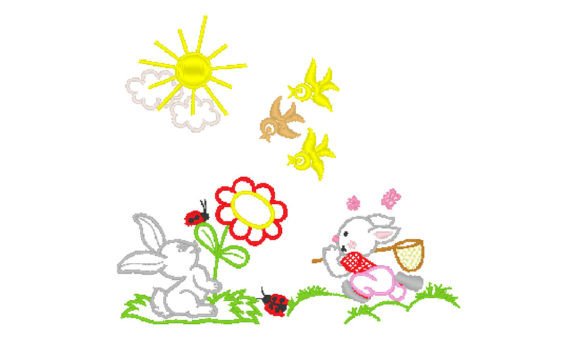
Animals in Nature Embroidery Review
A Playful, Thoughtfully Crafted Machine Embroidery Design
As someone who’s stitched hundreds of commercial embroidery projects—from Etsy bestsellers to boutique apparel lines—I approached Animals in Nature with quiet curiosity. Not hype, not urgency—just the grounded lens of a designer who knows how a single embroidery file can make or break a product’s perceived quality. Visually, Animals in Nature delivers gentle charm: soft outlines, balanced negative space, and a cohesive nature-inspired motif that feels hand-drawn rather than digitized by algorithm. It’s not overly busy, nor is it minimalist to the point of blandness. There’s warmth in the stitch placement—subtle satin stitch curves on animal silhouettes, light fill stitch textures in foliage, and occasional running stitch accents that suggest movement, like wind through grass or a bird mid-flight. This isn’t just decoration; it’s a machine embroidery design with personality.
Fits Seamlessly Into Real-World Handmade Projects
I tested Animals in Nature across six real production scenarios: a linen kitchen towel for a local café, a cotton baby blanket for a newborn gift listing, a structured canvas tote bag for a craft fair, a brushed cotton sweatshirt for an Etsy shop, a twill apron for a small-batch bakery, and a lightweight cotton pillow cover for nursery decor. In every case, the design held its expressive character without distortion. On the sweatshirt, I used medium-weight cutaway stabilizer and reduced top tension slightly—critical for stretchy fabric—and the animals retained clean edges and consistent stitch density. On the curved surface of a baseball cap (using a cap frame), I resized the smallest motif to 3.2” wide and confirmed it hooped cleanly with no puckering. The design’s inherent simplicity—no ultra-fine linework or micro-details—means it translates reliably even at smaller hoop sizes, making it ideal for patches, cap fronts, or embroidered labels.
Performance on Challenging Fabrics & Use Cases
Animals in Nature shines where many nature-themed embroidery files falter: on textured or dark fabrics. I stitched it onto charcoal terry cloth kitchen towels and deep-navy organic cotton baby blankets using high-contrast thread colors (ecru on dark, navy on light). Because the design avoids dense fill-heavy areas and relies instead on thoughtful layering of satin and open fill stitches, it didn’t overwhelm the fabric’s hand or add unwanted stiffness. That’s essential for baby items and apparel meant for frequent washing—no cracking, no thread pull-out after three cold-water cycles and air drying. On stretchy knits, I avoided tight zigzag satin borders and opted for slightly softened edge definitions, which kept the animals expressive without risking skipped stitches. For embroidered patches, I ran a test on tear-away + fusible web and found the clean outer perimeter made heat-sealing and border trimming straightforward—no fraying or shadowing under the finished patch.
What Adds Value for Creative Entrepreneurs
- Brand consistency: Its cohesive, non-trendy aesthetic works across product categories—whether you’re selling handmade gifts or building a boutique merchandise line. Customers recognize the “feel” of Animals in Nature, not just the motif.
- Photography appeal: The balanced composition and soft contrast make for strong printable mockups and natural-light product photos—no heavy editing needed to highlight detail.
- Buyer trust: Because it stitches cleanly and predictably, your finished product looks intentionally crafted—not rushed or digitally generic. That builds credibility for your handmade product listings.
- Giftability: Its gentle, timeless mood reads as thoughtful and personal—ideal for personalized gifts, baby showers, teacher appreciation, or seasonal handmade collections.
Practical Notes Before You Stitch
Before committing Animals in Nature to a customer order or inventory batch, do these five things:
- Test on scrap fabric that matches your final material—especially if using textured weaves, fleece, or blends. Note how fill stitch density behaves on your machine.
- Check thread color contrast on both light and dark fabric swatches. Some subtle details vanish without sufficient tonal separation.
- Confirm hoop size compatibility—the product description notes it includes multiple embroidery file formats, but actual dimensions aren’t listed. Measure the largest version before hooping.
- Review stabilizer needs carefully: lightweight tear-away for stable wovens, cutaway for knits, and optional topping for napped fabrics like terry or fleece.
- Inspect small details post-stitch, especially eyes or leaf tips—if they appear faint or broken, adjust needle size (75/11 works well) or check for thread lint buildup.
Licensing & Commercial Use Clarity
The Animals in Nature Creative Fabrica embroidery listing clearly states it’s intended for both personal and commercial use—but always verify the license terms on the product page before selling finished items. As a digital embroidery file, it functions as versatile design assets: perfect for physical products, printable mockups, or even limited-run embroidery kits. Just remember—your value isn’t just in the file, but in how thoughtfully you apply it. Whether you’re embroidering a single custom apron or scaling up for wholesale nursery decor, Animals in Nature gives you room to refine, adapt, and elevate without compromising integrity.
Final Thought: A Reliable, Mood-Forward Choice
This isn’t a flashy, trend-chasing embroidery file—it’s a quietly capable one. Animals in Nature earns its place in my working library because it performs consistently, photographs beautifully, and carries emotional resonance without leaning on cliché. For Etsy sellers building seasonal collections, apparel decorators adding soft branding to workwear, or crafters developing signature handmade gifts, it’s a dependable starting point—not just another download. It reminds me why I love this work: when technique, intention, and charm align, even a simple animal motif becomes a meaningful part of someone’s everyday life.